
Cooling Interfaces for Fluid Cooling in Data Centers
Installation Concepts
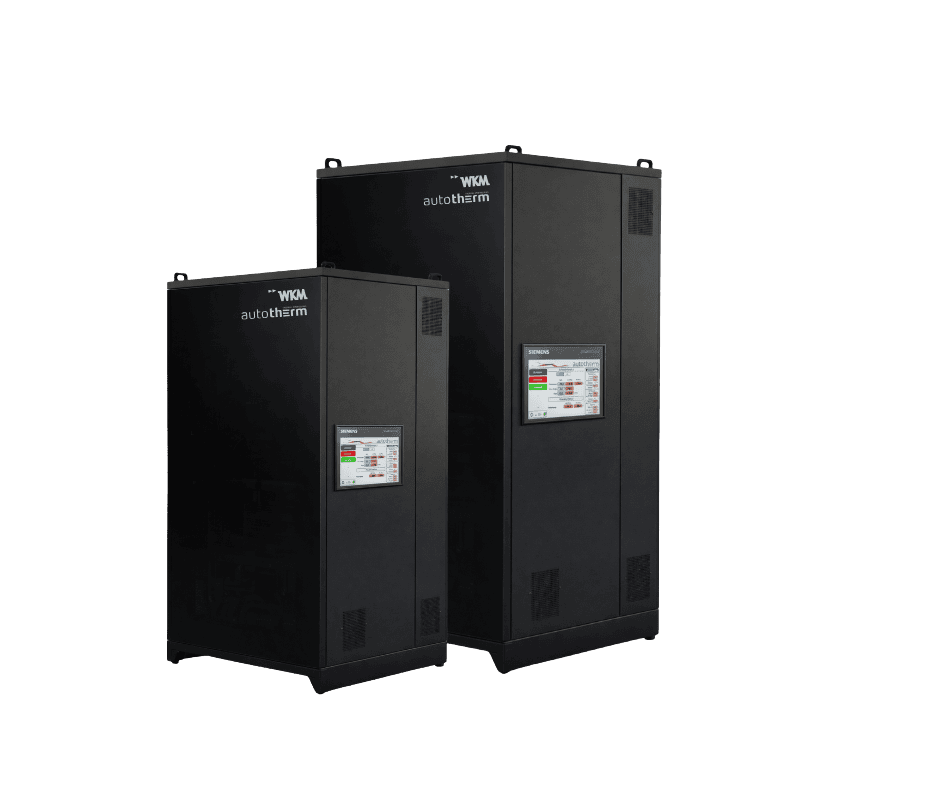
CDUs can be positioned differently depending on the Compute Cluster layout and cooling strategy:
- In-row models for rack-proximate integration directly in the white space
- Centrally installed CDUs to serve multiple rows or entire cooling zones
As a result, our systems support both compact high-performance areas and large-scale data center architectures-from individual AI racks to complete HPC cooling clusters.
Why CDU Are Necessary Today
With increasing power densities needed by AI and HPC applications, traditional air cooling is increasingly reaching its physical limits. Fluid Cooling enables significantly more efficient heat removal directly at the source. CDUs create the conditions for a stable and controlled IT cooling cycle, independent of fluctuations in the building’s water supply system.
CDU in the Data Center
A Coolant Distribution Unit is far more than just a fluid distributor. In the Data Center, the CDU functions as an active switching and control center for direct-to-chip cooling of performance optimized IT.
It ensures:
- controlled temperatures
- safe pressure levels
- maximum operational reliability for AI and HPC cooling
- communication with the Building Management System (BMS)
Conventional Air Cooling
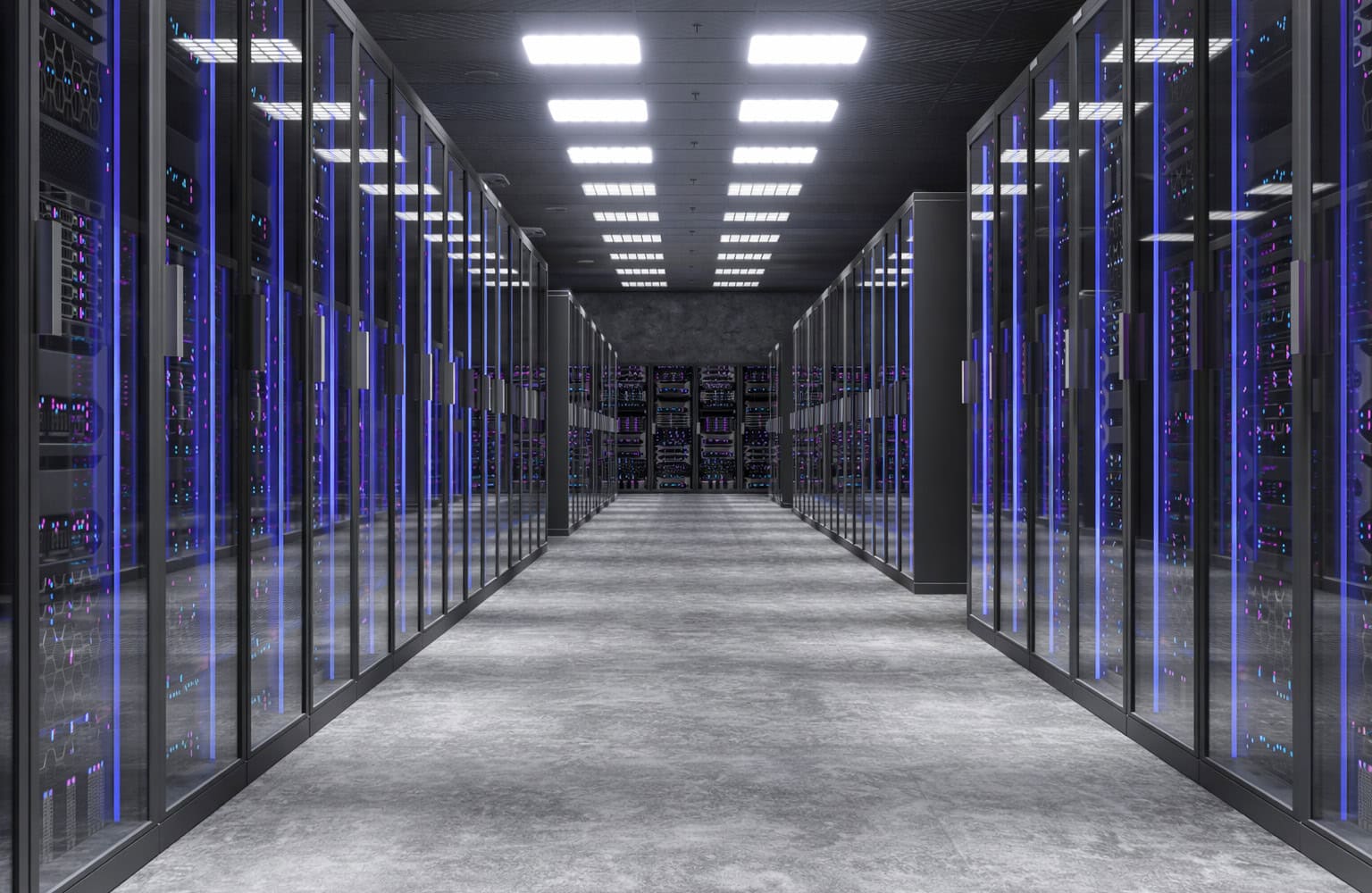
The rising power densities of modern AI and HPC workloads are making purely air-based cooling concepts increasingly inefficient and cost-intensive. Liquid cooling in Data Centers is therefore becoming the standard for the economical and safe operation of high-density racks.
Direct-to-Chip (D2C) cooling enables:
- significantly higher heat densities
- better energy efficiency
- stable operation even with dynamic AI workloads
The Coolant Distribution Unit (CDU) ensures that these cooling concepts are implemented reliably, safely whilst retaining scalability.
Your Benefits
A Coolant Distribution Unit (CDU) is the central interface for modern liquid cooling in Data Centers. It ensures maximum safety, scalability and efficiency-especially in AI and HPC infrastructures with high rack density.
- Hydraulic decoupling
The primary and secondary circuits are completely separate circuits. - Scalable high-density cooling for growing data centers
The in-row architecture enables the cooling capacity to be expanded in stages, ideal for growing AI Data Centers and phased expansions. - Precise control & intelligent monitoring
Sensors and intelligent control concepts enable reliable management and continuous monitoring of cooling processes – a decisive advantage for critical IT environments. - Maximum availability during operation
Redundant pumps, sensors and components allow maintenance to be performed largely during operation. This ensures your infrastructure remains available even during service calls – particularly relevant for HPC and AI applications. - Flexible integration & sustainable future-proofing
CDUs can be flexibly integrated into new and existing data center architectures and offer options for heat recovery and sustainable cooling concepts.
Industrial Precision
Our CDUs are based on decades of experience in Automotive testing – an environment where precise temperature, airflow and pressure control across a wide range of operating conditions is absolutely essential.
We apply this industrial expertise to Data Center technology:
- Robust, durable design
- Precise control
- Stable continuous operation – even with shifting dynamic AI loads
Result: An industrial solution “Made in Germany,” designed for reliable operation throughout its entire lifecycle.
Performance Parameters *
- Temperature range:
Room temperature to +70°C - Cooling capacity:
100 kW to 5 MW
depending on ΔT relative to the on-site cooling medium temperature
Additional capacity ratings available upon request
* May vary depending on Model and Configuration
Unit Features *
- Control & Monitoring:
– Temperature and flow monitoring on the primary and secondary sides
– Supply pressure and differential pressure control in the secondary circuit - Fluid:
Water, glycol/water, or deionized/ultra-pure water (optional) - Safety & Operational Protection:
– Leak detection via pressure drop monitoring
– Maximum pressure - Availability & Redundancy:
– Redundancy concept depending on the selected options
– Frequency-controlled consumer pumps - System Integration & Communication:
– Setpoint/actual values and error messages via Building Management System (BMS)
– Interfaces: BACnet, SNMP, MQTT, Modbus TCP/IP, OPC UA, and many more
* May vary depending on Model and Configuration
Options *
- Condensation Protection
Continuous protection through fully automatic flow temperature control based on ambient temperature - Filtration
Continuous filtration via fine filters - Redundancy concept
Temperature and pressure sensors as well as sensor input cards
Multiple secondary circuit pumps
Redundant control (hot standby)
Dual control valve (parallel / bypass)
Additional heat exchanger - Simplified cleaning
Flushing connections for the heat exchanger - Fluid
DE/DI water configuration
Optionally available with conductivity monitoring - Strainer
On the primary and/or secondary side - Connection position
Top and/or bottom - “audit ready” configuration
Extended temperature, pressure, and flow rate measurement
Energy meter
With simultaneous plausibility check - Heat recovery
Preparation for heat decoupling
Heat recovery module
Temperature increase via heat pump technology - UL-Ready
Adaptations for UL certification - Thermal enclosure of the system unit
Minimized heat radiation to efficiently reduce the load on the building’s HVAC system
* May vary depending on Model and Configuration
Technical data
Our data sheets are available for download as PDF files via the following links.